









A software product of your own · From idea to launch in 90 days

How business owners multiply their company's value and revenue with their own software asset

In one 30-minute Potential Analysis, we'll work out how much revenue and enterprise-value potential is sitting in your business. Then we build a software product customers actually use and pay for, month after month. You end up with a software asset that doesn't just generate recurring revenue — it could be worth millions when you exit.

Your Potential Analysis

Which of these sounds most like you?

We'll figure out how much potential your business has — whether you have a concrete idea yet or not. See your revenue potential →

Maximilian Schmidt
Maximilian SchmidtFounder & CEO, CPI Technologies · Frankfurt

AS SEEN IN

Sound familiar?

Why your current business can't scale forever

For most business owners, growth eventually turns into simple math: more orders mean more people, more cost, more risk. The business runs fine — it just doesn't scale. And that caps both your margins and what your company is worth.

Every new order means more headcount.

  • Your revenue is tied to hours — consulting, delivery, support.
  • Growing means hiring, and good people are hard to find.
  • When orders slow down, you're paying people to sit idle.
  • Growth hinges on recruiting and utilization — not on what you sell.

More input no longer means more output.

  • A service business model only scales so far.
  • More staff, more ad spend — but the revenue and margin growth never quite shows up.
  • Every additional step of growth returns a little less.

When it's time to sell, a service business isn't worth much.

  • Buyers pay for revenue that repeats every month and runs without you.
  • Revenue that depends on you and your network barely moves the needle.
  • Headcount doesn't factor into the valuation, and client contracts rarely run past six months.
  • Most owners only find out when succession is already on the table.

The solution

Our method: 90 days to a product customers pay for

No agency black box, no never-ending project. Three steps, each with a clear deliverable — all at a fixed price.

Step 1 · Weeks 1–2

Prove it before you build it

  • The free Potential Analysis pins down how much revenue and company value your idea can generate — and whether it's technically feasible.
  • We talk to five of your end customers and find out what they'd actually pay for.
  • You walk away with a written scope, a fixed price, and a launch date.
  • If the idea doesn't hold up, we stop right there — you only pay for this stage.

Step 2 · Weeks 3–9

Weekly sprints to version one

  • AI-powered development puts a clickable prototype in your hands within days — not months.
  • Every Friday, you review the latest build in your browser and decide what we build next week.
  • The fixed price never changes — no matter how many hours we put in.

Step 3 · Weeks 10–13

Test with real customers — then start selling

  • Five to ten users from your client base use the product for four weeks while we watch where they get stuck and what they'd pay for.
  • Their feedback goes into the product before you spend a cent on marketing or sales.
  • After launch, we stay on to run and grow the product — and you can take over code, credentials, and documentation whenever you like. The code is 100% yours at all times.
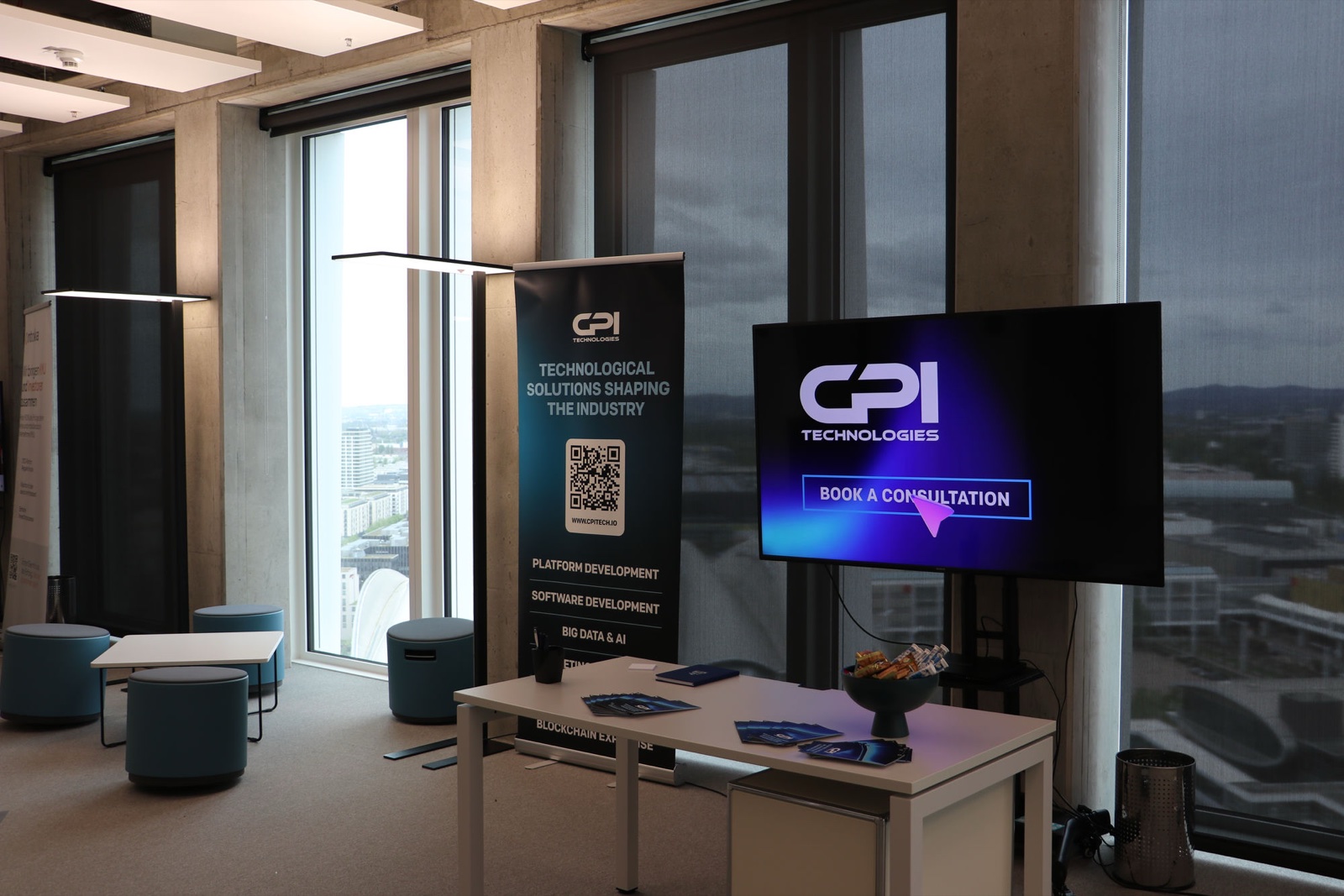
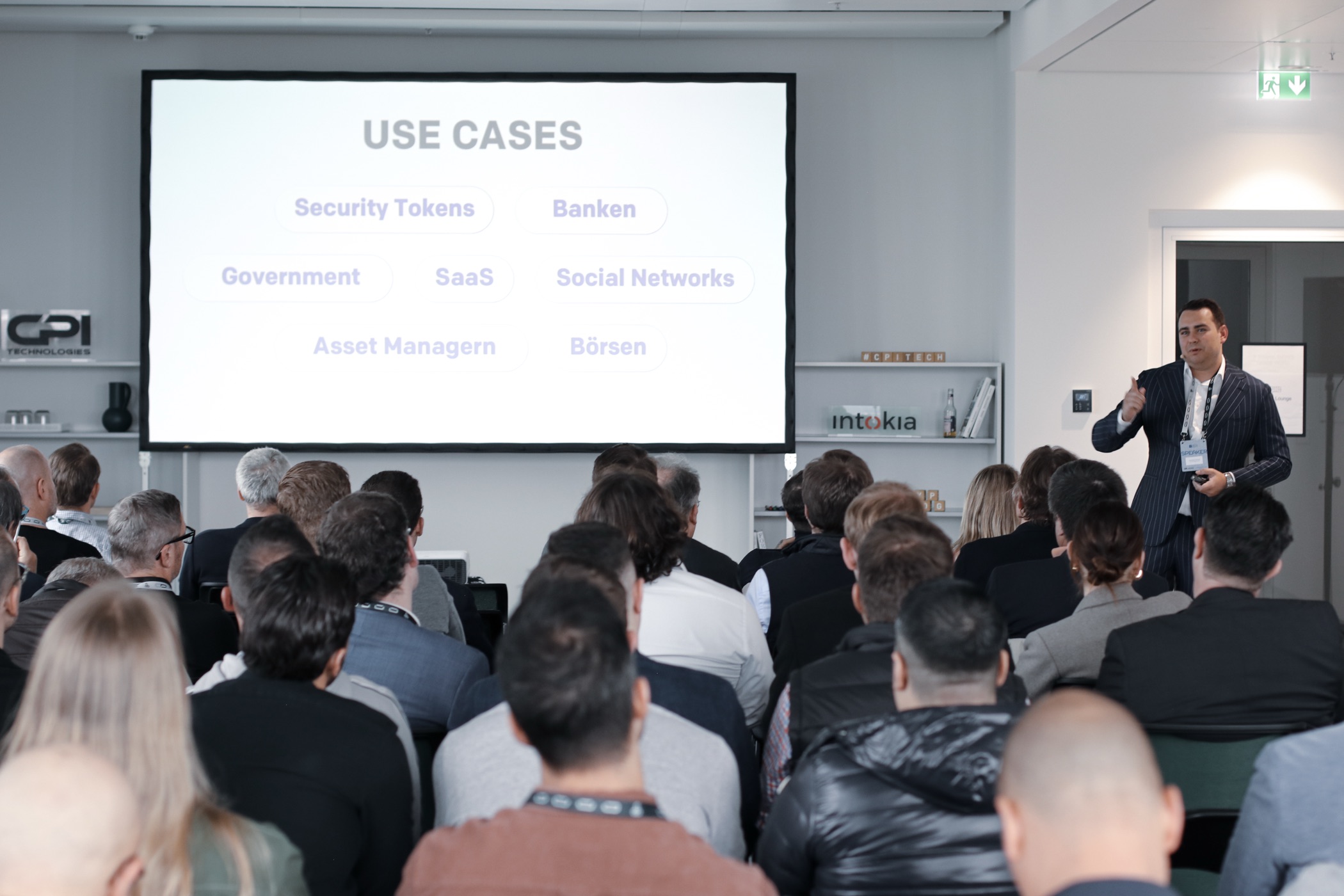
CPI Technologies at an entrepreneur event in Frankfurt

What you get out of it

What's in it for you

Software that works for you: as a product, as an asset, and as proof that your idea holds up.

A new revenue stream

A product your customers pay for — on top of your core business. Software serves ten customers or ten thousand, and your costs barely move.

A more valuable company

In a valuation or a sale, recurring software revenue counts as an asset in its own right — unlike billable services. You're building real substance into your balance sheet.

Certainty instead of gut feeling

You'll know before launch whether customers will use and pay for the product — not a year and a marketing budget later. And if the idea doesn't hold up, you'll know within two weeks.

What's included

What you get

A finished product, ready to go live. Tested with real customers and iterated until it genuinely solves their problems — and they're provably willing to pay for it. An asset that compounds your company's value through recurring revenue and sets you up for a future exit.

CPI TechnologiesTraditional agencyIn-house dev teamFreelancers
Full service from idea to execution✓✕✕✕
Validation with real customers — interviews before the build, four-week test phase✓✕✕✕
Fixed price with no change orders✓✕✕✕
Launch within 90 days✓???
No hiring required✓✓✕✓
Ongoing support and development✓✓✓✕
You own the source code and credentials✓?✓✓
CTO experience, growth capital, and fundraising support✓✕✕✕

What we build

Our track record

Always software somebody pays for — your customers, other companies, or your own team moving faster. Every example below is a product we built ourselves.

Web platform — example SellerpointFrom our portfolio: Sellerpoint

Web platform

Ordering portals, customer portals, marketplaces: your customers handle online what still takes phone calls and email today — around the clock.

SaaS solution — example ServiooFrom our portfolio: Servioo

SaaS solution

Your process, turned into a product: other companies pay monthly for the software that already lets you outperform your industry.

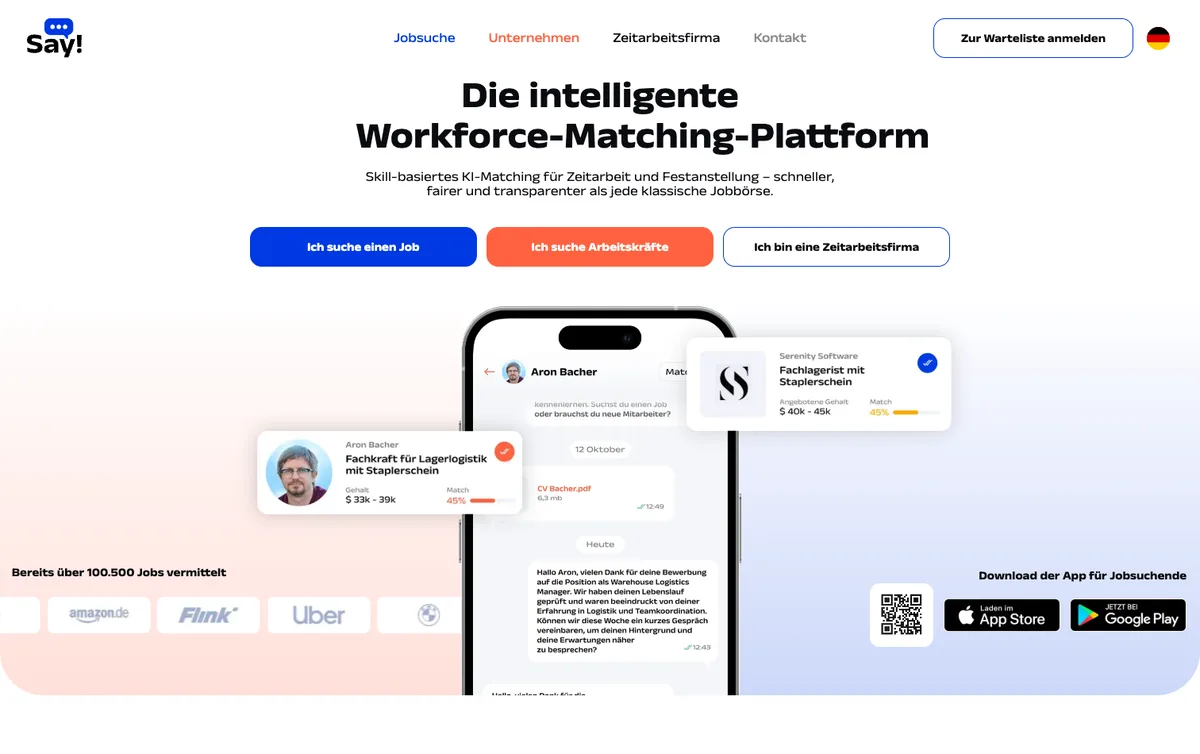
Mobile app (iOS + Android) — example SAY AppFrom our portfolio: SAY App

Mobile app (iOS + Android)

Right in your customers' pockets: order, book, request service — with push notifications that reach them directly.

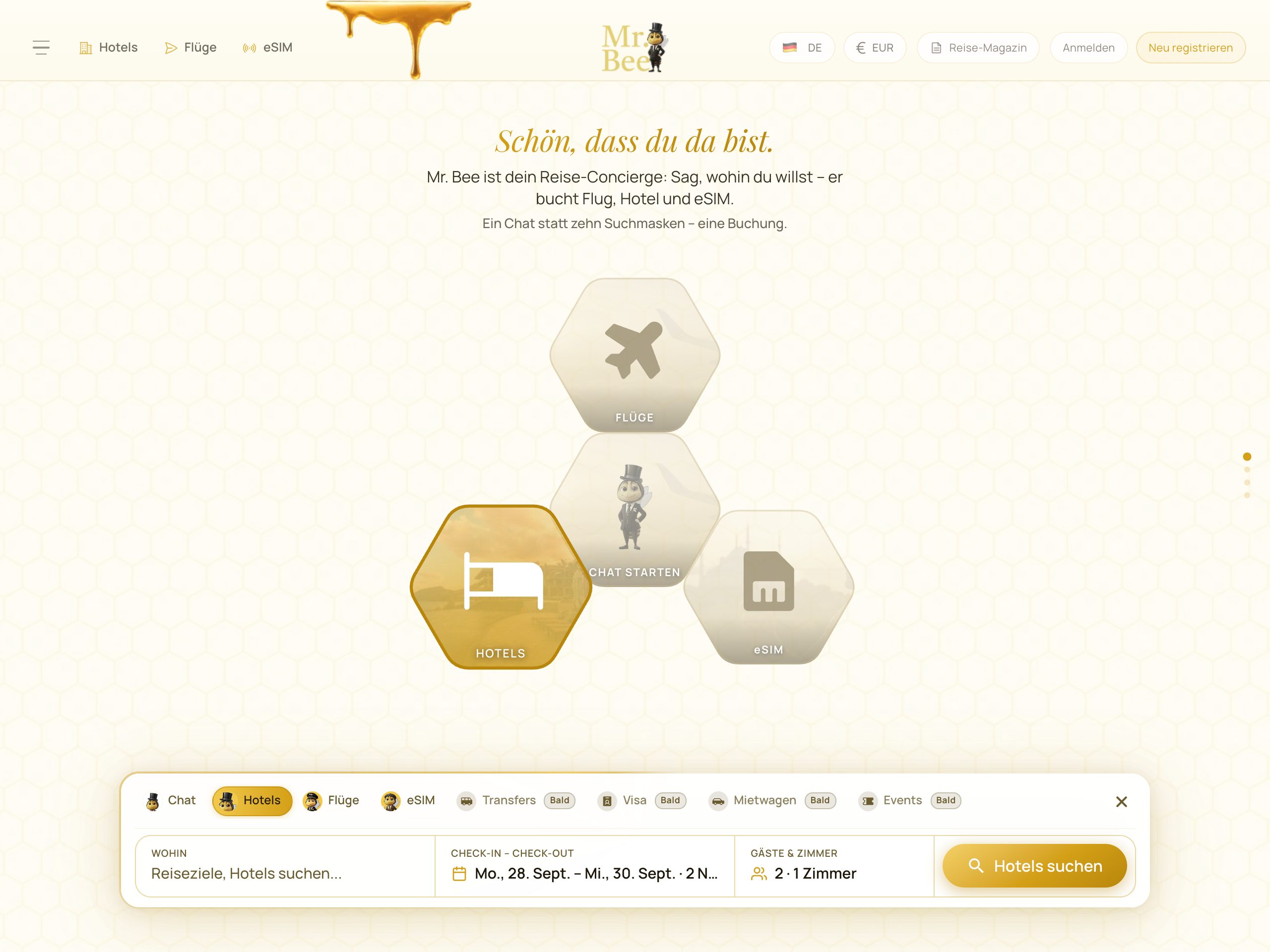
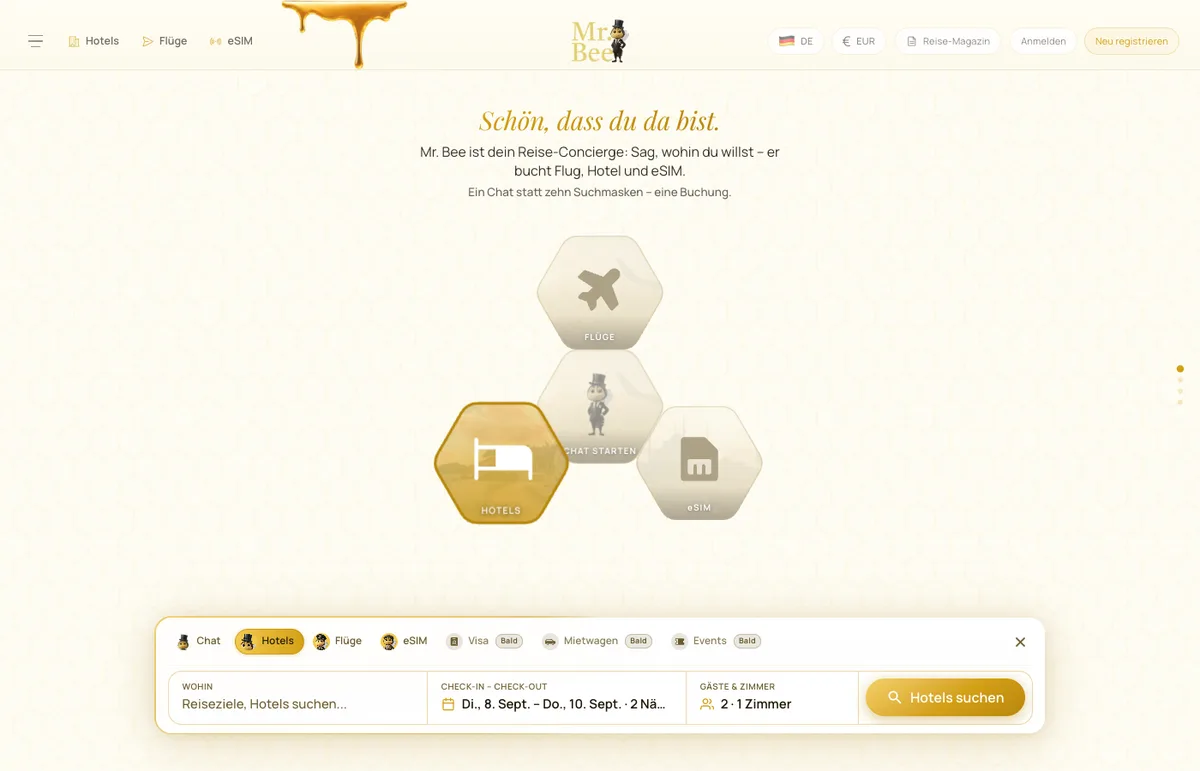
AI Agents — example Mr. BeeFrom our portfolio: Mr. Bee

AI Agents

Digital coworkers that answer inquiries, draft quotes, and capture orders — without growing your team.

Built on the same stack as the big products

Next.jsNestJSExpoOpenAIAnthropic ClaudeModel Context ProtocolLangChainKeycloak

The business model behind it

How your software makes money

Having an app is one thing. Software that brings in revenue month after month is another. In your Potential Analysis, we'll map out which combination fits your business.

01

Recurring revenue through subscriptions

Your customers pay a monthly fee — predictable revenue that compounds with every new customer instead of having to be re-sold each month.

02

Upsells through modules

Entry stays affordable while revenue per customer grows: extra features, analytics, or integrations are added as paid modules.

03

Variable usage fees

Per-seat, per-order, or per-transaction fees: revenue climbs automatically as customers push more of their business through your software.

04

Combination with your core business

The software amplifies what you already sell: it locks in customers, sets you apart from the competition, and feeds orders back into your core business.

05

Setup fees

Setup, onboarding, and customizations billed once per customer — so the product pays for itself from customer number one.

iMonths 1–3: scope, price, and development in weekly cycles — every Friday you see the latest build in your browser. No paying customers yet.Development
iMonths 4–6: five test customers from your client base work with the product. Their feedback is built in before a cent goes into sales.Test phase
iMonth 7 onward: sales kicks off and new customers come in every month — while we keep running the product.Scaling
Month 1 · KickoffMonth 24
MRR Number of customers

€76,390

MRR in month 24 iMRR = Monthly Recurring Revenue: the recurring revenue from active subscriptions each month — the single most important metric of a software product.

€916,679

ARR in month 24 iARR = Annual Recurring Revenue: yearly recurring revenue, i.e. MRR × 12. SaaS valuations are based on this number.

€4,125,057

Company value at 4.5 × ARR

Illustrative model: development in months 1–3, test phase with 5 test customers in months 4–6, scaling with the selected number of new customers from month 7; churn as a share of the customer base, revenue shown before operating and sales costs. The ARR multiple of 4.5× is the median for private SaaS companies (range 2–7).

Maximilian Schmidt speaking to business owners at a CPI event

The right fit

Who this offer is designed for

Owners and CEOs with a healthy core business

Companies doing roughly €1–20 million in revenue. The core business runs — and that's exactly where the software idea came from.

You have an idea born from your business

The wholesaler who wants to give customers an ordering portal. The service provider who wants to sell their process as software. The manufacturer whose Excel calculation is ready to become a product.

You don't need to have it all figured out

You don't need a finished feature list – we work it out together from your business. We'll only tell you honestly if the software is purely internal and doesn't need to earn revenue: then a different offer is a better fit for you.

Maximilian Schmidt — Founder, CPI Technologies

Maximilian Schmidt

Founder & CEO, CPI Technologies

The founder

Who's behind your project

I'm Maximilian Schmidt, founder of CPI Technologies in Frankfurt. I wrote my first line of code at eight and started my first company at fourteen. Since 2017, I've invested over two million euros of my own money in software companies and hold stakes in more than ten — serving as CTO for several of them.

I know exactly what a product nobody uses costs — I've paid for a few myself. Those mistakes are why every one of our projects includes a test phase.

In 2025, I wrote a book on how business owners can have software built with AI without giving up control (vibecodingbuch.de). Those are the methods we apply to your project.

Once the product is live and you want to keep building it out, you can bring me into the company as CTO in exchange for equity. But that's a conversation for after launch, once we both know how the product lands with customers.

Testimonials

Your Trust Is Our Reward

Problem

E-commerce know-how was being sold as a service — there was no scalable platform behind it.

Goal

Enter the e-commerce SaaS business with a robust, user-friendly platform.

Result

Sellerpoint is live and routes tens of thousands of orders per day — with CPI as a long-term partner.

Nicklas SpelmeyerNicklas SpelmeyerSellerpoint · CEO eCommerce.de

Problem

Only a bare-bones prototype of the travel app — a long way from a market-ready product.

Goal

A full-fledged AI app with mobile and web presence that stands out in the market.

Result

Vacabee is live as an AI app across iOS, Android, and web — one of a kind in this form.

Dennis LulicDennis LulicVacabee · CMO & Founder

Problem

The idea for a membership platform was there — a path to fast execution wasn't.

Goal

Get Ameritum to market fast.

Result

Platform delivered in record time thanks to AI-powered development — more joint projects are underway.

Ulvi AydinUlvi AydinAmeritum · Founder & Interim Manager

Problem

Fundraising required a platform that could withstand regulatory scrutiny.

Goal

A BaFin-compliant fundraising platform, delivered in time for launch.

Result

Launched on schedule and entered the market successfully — exceeding requirements.

Martin AlbertMartin AlbertBitalo AG · CEO

Problem

Real-world assets were ready to be tokenized — but an experienced technology partner was missing.

Goal

Build and operate a tokenization platform in a regulated environment.

Result

intokia.com was built with remarkable efficiency — CPI is a permanent partner in the ecosystem.

Sven BüchelSven BüchelIntokia · Van Sterling Capital

Problem

Manual processes were holding back precious metals trading and market presence.

Goal

A modern platform that automates operations and scales the business.

Result

Trading is significantly more efficient and profitable — they commissioned a second app on the spot.

Zhenwei WangZhenwei WangPrecious metals trading platform

Problem

A Web3 social media app needed blockchain solutions and a comprehensive API — without an in-house tech team.

Goal

A robust, seamless solution from architecture through implementation.

Result

Delivered on time and beyond expectations — the app launched successfully.

Jordan YallenJordan YallenWeb3 social app

Frequently asked questions

What business owners ask before hiring us

How can the price be fixed if the scope is only defined in stage 1?

The quote costs you nothing: in the free Potential Analysis, we find out together whether your idea has legs. You then receive a written fixed-price quote with scope and launch date. Once you sign, that number doesn't move — anything extra later gets its own quote.

What do I need to bring?

Two things: an established business with annual revenue of roughly one million euros or more – and a good understanding of your target customers. You know which problems your customers have and what they pay for; that is exactly what the product is built from. You don't need any technical knowledge: we take care of architecture, development and operations.

What happens if I want to extend the product after launch?

Every extension gets its own quote with its own fixed price — the live product stays untouched. You can also have extensions built by your own team or another provider: on request, we hand over code, credentials, and documentation at any time — the code is yours.

You work with AI. Does that make the code worse?

For us, AI speeds up writing code — not making decisions. Architecture, data model, and reviews are handled by a human who has been building software for nearly ten years. Every line goes through the same tests and standards as hand-written code. That way of working is what makes the fixed price and the 90 days possible in the first place — and it's publicly documented in our book (vibecodingbuch.de).

Who owns the code?

You do. The source code, all credentials, and the documentation belong to you — including the hosting and service accounts, which run under your company's name. We keep supporting the product long term, but a complete handover is possible at any time: if you never hire us again, you're not missing a thing.

How binding are the 90 days?

The 90 days are an average across our projects — your specific launch date is written into your fixed-price quote. With AI-powered development, a testable prototype you can click through yourself exists within days, and the weekly cycles surface deviations early instead of at the end. Only one thing can move the date: you deciding to expand the scope. And we'll talk that through before anything gets built.

What if stage 1 shows the idea doesn't hold up?

Then we stop right there. Upfront, you only pay part of the fixed price — the stage where we find out whether the idea can work. If it ends there, the rest is never owed. You receive the interview results and our written reasoning — which makes this the cheapest lesson you'll ever get in a software project.

Where is the software hosted, and how safe is the data?

Hosting is in the EU, GDPR-compliant, on accounts owned by your company. At any time, you get a full breakdown of running costs and every service in use — there's no lock-in that only we can undo.

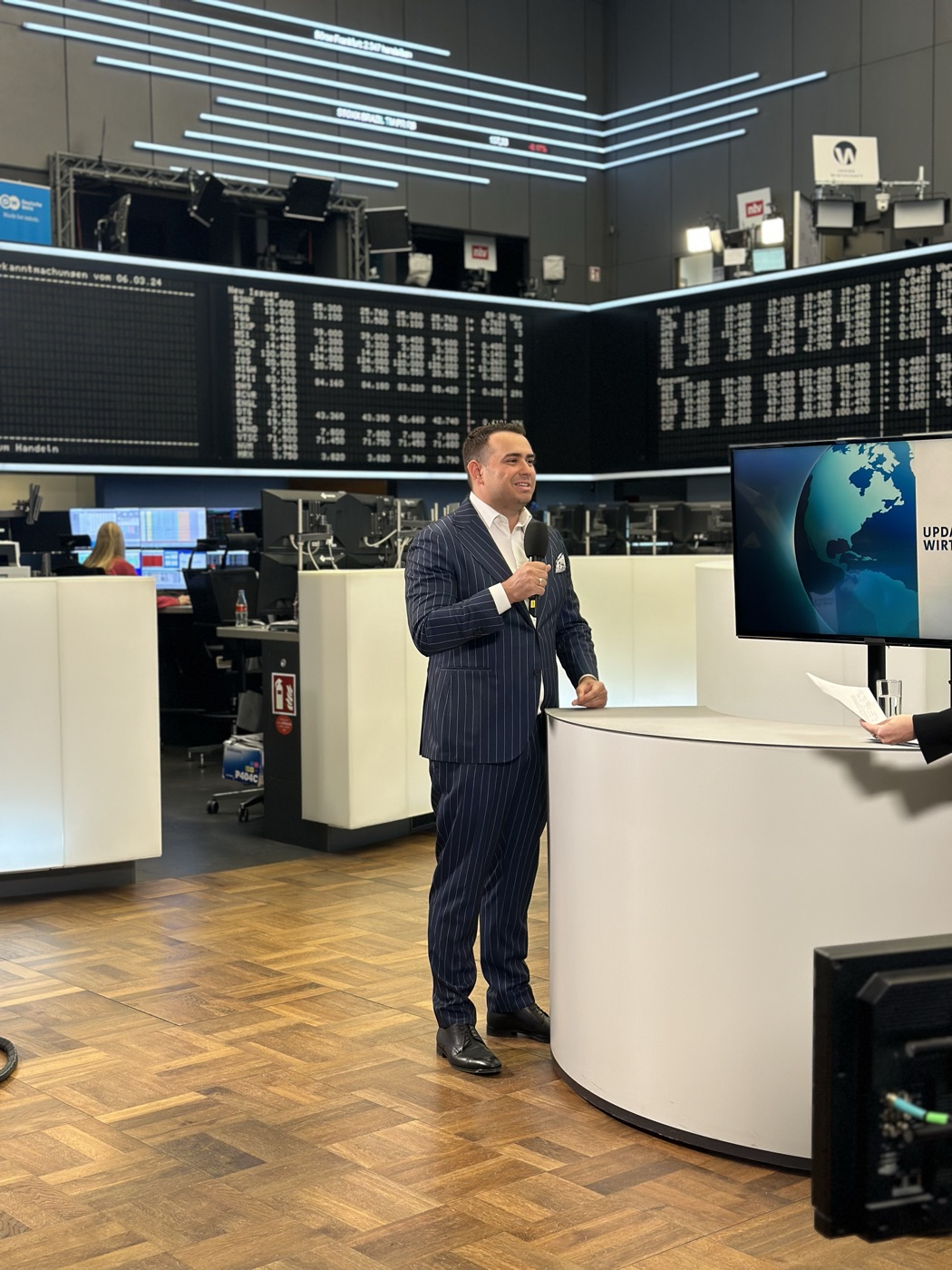
Maximilian Schmidt on the trading floor of the Frankfurt Stock Exchange

Potential Analysis

How much potential is in your idea?

Demand is high, so we take on a limited number of new projects each month. Pitch us your idea — in 30 minutes we'll work out how much revenue is on the table, what value you'd be building, and whether it's technically feasible.

Free and non-binding · We usually reply within one business day

Book your slot

Answer five short questions about your idea. If it's a fit, you pick a time for your Potential Analysis right away; otherwise Maximilian gets back to you personally.

Potential Analysis (30 min)

Over video or phone, we'll work out together how much revenue is possible, what value you'd build, who would pay for it — and whether the idea is technically feasible.

Written assessment

Within two business days, you receive a written assessment with a roadmap and price range. If we think the potential is too small, we'll tell you that just as plainly.

For selected projects only

If your product wins us over, we invest alongside you

For some projects, development is just the beginning: when a product proves itself after launch, Maximilian Schmidt invests his own capital or takes an equity stake as CTO. The CPI portfolio currently spans 10 companies — here are two of them.

Sellerpoint — Produkt

since 2022

E-commerce · Multichannel platform · Technical Advisor & Shareholder

Selling on Amazon, eBay, Otto, and Kaufland from a single interface — set up as its own company from day one, today with CPI on board as a shareholder.

Tens of thousands of orders per day

★★★★★
„CPI has grown from an external agency into a long-term partner for us. Maximilian hired and onboarded today's full-time CTO and the in-house development team, so the company now runs completely on its own.“
Nicklas SpelmeyerNicklas SpelmeyerCEO, eCommerce.de
Visit website →
Mr. Bee — Produkt

since 2025

Travel · AI travel concierge · CTO & Shareholder

Booking a trip means juggling ten different search screens for flights, hotels, and eSIMs — Mr. Bee turns all of it into a single chat where you search, compare, and book.

$10M valuation reached — $2M raised for further growth

★★★★★
„Maximilian understands how to build apps that are successful and create value. I am very grateful to him and the CPI team for the collaboration and look forward to the future of Vacabee.“
Dennis LulicDennis LulicCMO & Founder Vacabee
Visit website →

Whether your project qualifies gets decided after launch — once we both know the chemistry is right for a long-term partnership and for scaling the project to the next level.